
In most households, one person becomes the human database — the one who knows when the dentist appointment is, whose soccer cleats are too small, when the electric bill is due, and what's for dinner. That role rarely gets assigned; it accumulates. The problem isn't that your family is unwilling to help — it's that the planning lives inside one person's head, where no one else can see it or take it over. The fix isn't a better chore chart or a firmer reminder. It's making the invisible work visible and shared, so responsibility can actually move off one set of shoulders. This guide walks through how to do that in practice.
First, name the invisible work (the real problem)
The reason the default planner can't just "delegate" is that most family logistics are invisible until they're urgent. Remembering that a permission slip is due Friday, tracking which subscription renews next week, knowing the babysitter's number — none of it is written down anywhere the rest of the family can reach. It's ambient knowledge that lives in one head, which means offloading it requires a 10-minute explanation every single time.
The first move is to externalize that knowledge. Spend a week jotting down every planning decision you make — not the tasks, the *thinking*: 'noticed we're low on milk,' 'realized the trip needs a hotel,' 'remembered Mom's birthday is soon.' You'll be shocked how long the list is. That list is the mental load. You can't share what you haven't named.
- Anticipatory work: noticing something needs doing before anyone asks
- Monitoring: keeping track of what's in progress or due soon
- Decision-making: choosing between options (which dentist, what gift)
- Coordination: making sure two people's schedules and info line up
Move the mental load to a shared surface, not another person
The instinct is to hand tasks to a partner or kids. But if the information still lives in your head, you've just become a project manager — assigning, following up, and re-explaining. That's often *more* work. The better target is a shared surface everyone can independently check: a family calendar, a running grocery list, a visible ledger of who paid for what.
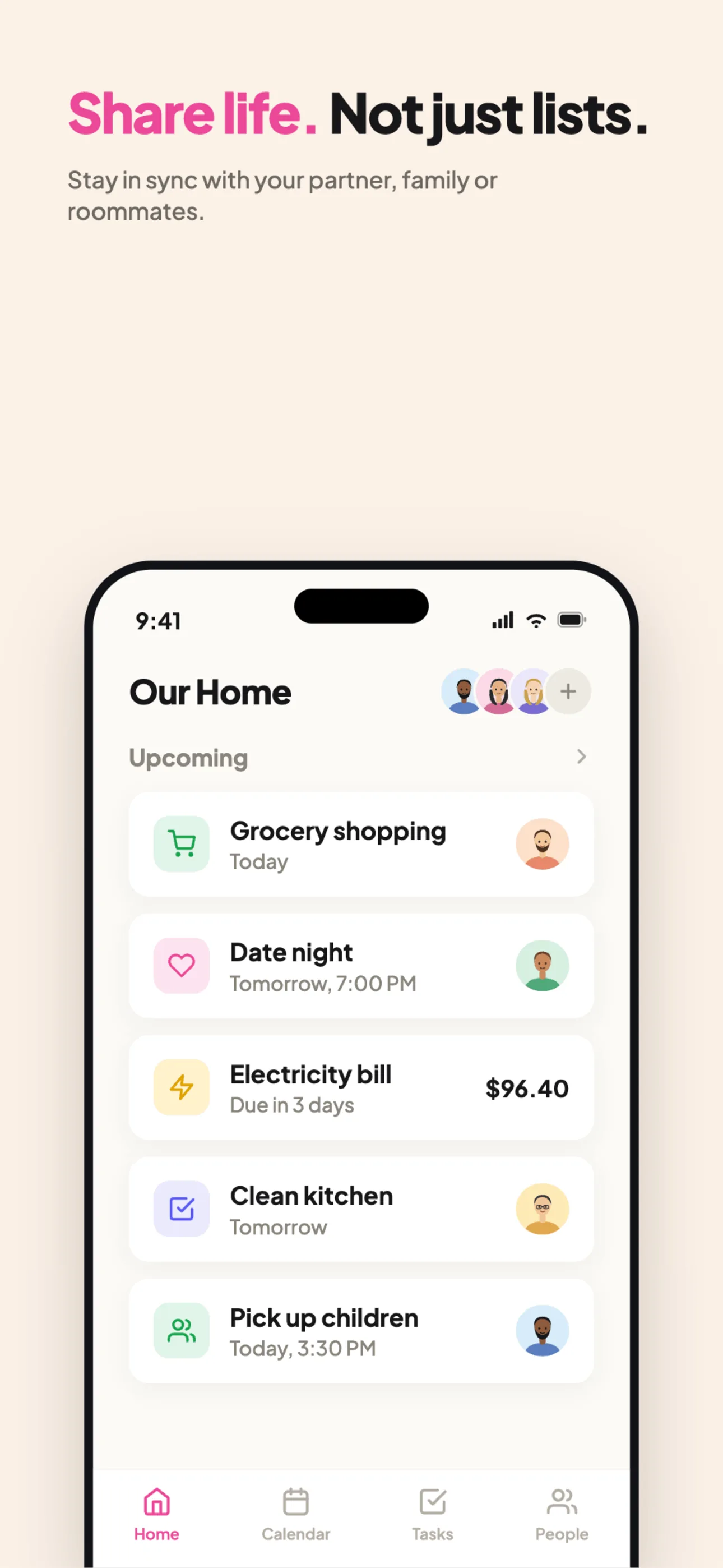
This is exactly the gap a shared-coordination layer fills. Yuki connects to the family inbox and turns the confirmations, receipts, invites, and bills already sitting there into a live shared picture — a two-way Google Calendar, tracked expenses and subscriptions, grocery lists, reminders, and birthdays — inside shared groups built for families and co-parents. Because it reads what's already in email, no one has to manually re-enter the soccer schedule or the flight time; it shows up for everyone automatically. The point is that the household's knowledge stops being something one person remembers and becomes something the whole family can see.
- A shared calendar that any adult can check without asking you
- A grocery list anyone can add to from their own phone
- Bills and subscriptions visible so the mental tally isn't yours alone
- Bill-splitting and settle-up so money coordination isn't one person's job
Assign ownership of domains, not one-off tasks
Handing out individual tasks keeps you in the loop as the assigner. Handing out whole *domains* removes you entirely. Instead of 'can you book the dentist,' the deal is 'you own all health appointments' — booking, remembering, rescheduling, the works. Ownership includes the anticipatory and monitoring work, not just the execution.
Sit down as a household and split the recurring domains: meals and groceries, kids' school and activities, bills and subscriptions, travel, home maintenance, social calendar. Each domain gets one owner who is accountable for the thinking, not just the doing. A shared workspace makes this stick, because the owner can see their domain and act on it without routing everything back through you. When the school emails a half-day notice, the person who owns the school domain sees it land on the shared calendar and handles it.
Automate the remembering so no one has to be the alarm clock
A huge slice of the default planner's load is simply *remembering on behalf of others* — bills, renewals, birthdays, appointments. This is the part that's easiest to hand off to a system rather than a person. Recurring reminders, bill due-dates, and subscription renewals should fire to whoever owns them, automatically, so no one has to be the household's walking alarm clock.
Let the tooling do the monitoring. When a subscription is about to renew or a package is out for delivery, a smart notification to the right person means the knowledge isn't trapped in one head anymore. A short daily briefing that lays out what's ahead for the family gives everyone the same starting picture each morning — which is often the single most equalizing change, because now nobody depends on you to know what today looks like.
Hold the line so the load doesn't creep back
The hardest part isn't the redistribution — it's not silently reabsorbing everything the first time a ball gets dropped. When the person who owns groceries forgets milk, resist fixing it for them; let the natural consequence and the shared list do the teaching. Every time you quietly rescue a domain, it migrates back to you.
Do a light monthly check-in: is each domain still owned, is the shared calendar being used, is anything drifting back into 'I'll just handle it'? The goal isn't perfection — it's that the family's logistics live in a shared, visible place instead of one exhausted brain. When the information is shared and the system does the remembering, being the 'default planner' stops being a full-time unpaid job.
Step by step
- 1Track the invisible work for one week — write down every planning thought, not just tasks — to see the true size of the mental load.
- 2Pick one shared surface (a family calendar, list, and expense tracker everyone can independently check) and get it set up.
- 3Connect your family inbox so confirmations, bills, invites, and receipts flow onto the shared calendar and lists automatically, instead of being re-entered by hand.
- 4Split recurring domains (meals, school, bills, travel, home) and assign one accountable owner to each — including the noticing and remembering, not just the doing.
- 5Turn on automatic reminders for bills, renewals, birthdays, and appointments so a system does the remembering instead of a person.
- 6Add a shared daily briefing so the whole family starts each day with the same picture of what's ahead.
- 7Do a monthly check-in and resist silently reabsorbing dropped domains — let the shared surface and natural consequences hold ownership in place.